
Pharmacology and Safety-Toxicology
Safety and efficacy assessment for new pharmacological compounds.
Why it matters?
Preclinical safety pharmacology requires robust cardiorespiratory and activity assessment across both rodent and non-rodent models.
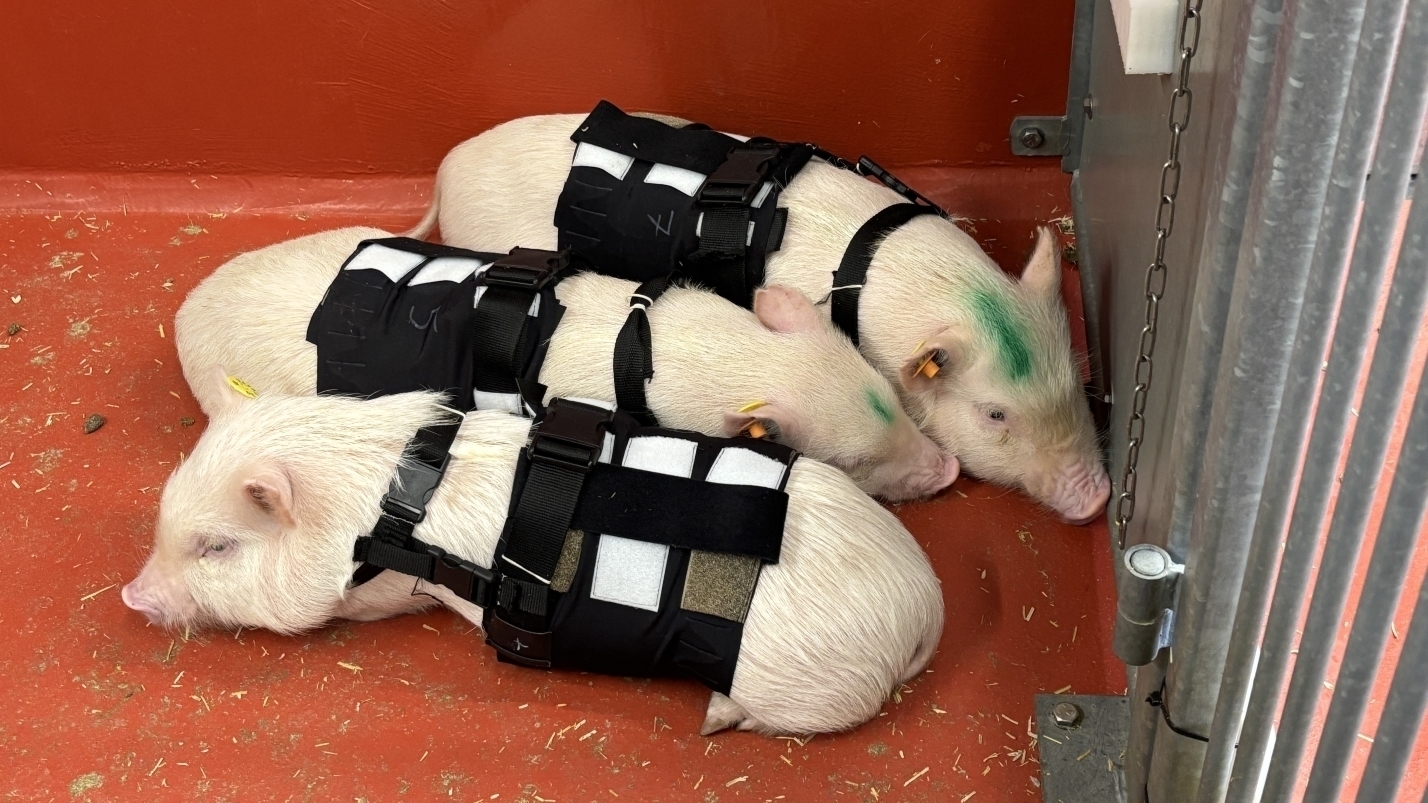
DECRO® provides a unified telemetry platform engineered to evaluate cardiac, respiratory, and motor functions seamlessly across multiple species – including rats, marmosets, dogs, and pigs.
-
One Platform, Multiple Species: Standardize hardware and software across your facility to maximize ROI, streamline workflows, and shorten learning curves.
-
Comprehensive Physiology: Capture continuous ECG, respiration, and actigraphy data in conscious, freely moving animals.
-
Full GLP Compliance: Built for regulated environments and already trusted by leading CROs in GLP-compliant studies.
Looking for a CRO partner offering NON-GLP or GLP safety assessment services with DECRO?
This approach allows for :
Rapid and Cost-effective pharmacological studies for decision making (only a few minutes per animal and no specialized technical expertise). In addition, jackets are significantly more cost-effective, priced three to five times lower than typical refurbished telemetry implants.
Reducing Severity (Refining) through its completely non-invasive nature, eliminating potential harm, surgery, and related pain for the animals. As a result, it aligns with animal welfare regulations and ethical committee requirements (e.g., EU Directive 2010/63, NIH guidelines), while supporting social housing and interactions.
Unrestrained, Extended-Duration Safety Assessment, aligning with best practices for cardiovascular telemetry (e.g. ICH E14/S7B Q&A 5.1, 6.1) and enabling longitudinal assessment to offer a full picture of potential delayed and chronic effects.
Streamlined preclinical evaluation aligned with ICH M3(R2) and ICH S6 guidelines. This provide a unique opportunity to reduce animal use and eliminate the need for separate studies by integrating safety endpoints directly into repeat-dose and general non-GLP and GLP toxicology studies.
Use Cases
Discover how DECRO can support your safety and efficacy studies.
Early Drug De-risking
DECRO’s minimal-overhead integration early in drug development is invaluable for early de-risking, allowing for the timely identification of potential adverse effects and better informing subsequent studies.
Example: a pharmaceutical or biotech company can seamlessly incorporate DECRO into a rat preclinical Dose Range Finding (DRF) study with minimal impact on established protocols. The rich cardiorespiratory endpoints provided offer functional insights, enabling a comprehensive assessment of the dose-response relationship. This, in turn, facilitates a more precise analysis of both the efficacy and safety profile of the investigational drug, streamlining the development process and reducing the risk of late-stage failures.
Efficacy - Disease Models
DECRO offers a sophisticated approach for evaluating the pharmacological effects of novel compounds on disease models. Its non-invasive nature provides a distinct advantage by preventing additional stress on models already compromised by their condition, thus ensuring more accurate and representative data.
Example: non-invasive ECG assessment can be readily employed in rat Chronic Kidney Disease (CKD) models to evaluate the efficacy of mineralocorticoid receptor antagonists. This lightweight approach allows for continuous, high-fidelity monitoring of cardiac function without imposing further burden on the animals, providing precise insights into treatment response.
Regulatory Safety Pharmacology and Toxicology
Assessing acute and potentially life-threatening risks of novel pharmaceuticals is a critical step in IND-enabling studies with a primary focus set on the cardiovascular, respiratory, and central nervous systems, in line with ICH S7 and S6 guidelines for safety assessment. In this contexte, DECRO offers robust capabilities for safety assessment in both rodent and non-rodent species (dogs, minipigs, and marmosets) with comprehensive respiratory core battery assessment and Electrophysiological evaluation in unrestrained animals, including extended-duration QT prolongation assessment (ICH E14/S7B). Moreover, non-invasive jacketed telemetry systems ease the implementation of standalone safety pharmacology studies or, more beneficially, smoothly integrate into combined designs as recommended by ICH M3(R2). As a result, this allows CROs to propose enhanced ICH S7 core battery safety pharmacology studies to their sponsors.
Examples of use
In rodents, DECRO facilitates the integration of ICH S7 Core Battery CNS and respiratory endpoints into a single study design, thereby significantly improving development time and resource utilization (link to ERBC paper).
Similarly, in non-rodent studies, jacketed telemetry enables efficient repeated evaluation of safety endpoints within repeated-dosing toxicology studies (e.g., 4 or 13 weeks). This integrated approach efficiently provides robust safety data without increasing the overall animal burden required for the IND submission package.
Resources on Pharmacology and Safety-Toxicology
Advancing Minipig physiological monitoring with an enhanced jacketed telemetry solution
Cambier, Agathe1 ; Nadjar, Clémence1; VOLLE, Guillaume1; Søgaard, Susi2; Birch, Pernille2 ; Brodersen, Katrine2; VHoeg Thygesen, Charlotte2; Latzko, Marie3; Baudet, Stéphane3; Chirat, Sophie3; Eynard, Charles1; Flenet, Timothé1 1 ETISENSE, Lyon, RHONE, France.2...
Etisense at ScandLAS 2026: Enhancing Minipig Physiological Monitoring
We are delighted to announce that Etisense is back at Scand-LAS for the 2026 Conference in Copenhagen, Denmark, from May 26-29, with a booth and a poster presentation. This event, focused on Science & Care, is a key meet for professionals in laboratory animal...
Continuous non-invasive extraction of hemodynamic variables from thoracocardiographic signals using the ensemble averaging technique: validation in anesthetized rats without ventilatory support
Leandro Fontana-Pires1, Stephane Tanguy1, Agathe Cambier2, Charles Eynard2, Timothé Flénet2, Julie Fontecave-Jallon1, Francois Boucher1 and Pierre-Yves Gumery1 ¹ Univ.Grenoble Alpes, CNRS, UMR 5525, VetAgro Sup, Genoble INP, TIMC, 38000 Grenoble, France² R&D...
Jacketed Telemetry with Integrated ECG electrodes: A Comparison with Traditional Implants in Beagle Dogs
FARES Raafat1, BENDRIMIA Anes1, BOUARD Delphine1, CAMBIER Agathe2, NADJAR Clémence2, EYNARD Charles2, FLENET Timothé2, Pascal CHAMPEROUX1 1ERBC Chemin de Montifault, 18800 Baugy, France2R&D Department, ETISENSE, Lyon, RHONE, FranceAbstract Jacket telemetry...
Explore Other Applications

Phenotyping of disease models
Monitoring of ECG morphological changes, ventilation, and locomotor activity patterns changes to better characterize pathological phenotypes and understand underlying pathophysiological mechanisms.
Monitoring of vital functions
Monitor the health status of your animals following a medical condition or surgery (e.g., cardiac stroke), or anticipate humane endpoints in severe procedures using jacketed telemetry — all while allowing a return to the home cage.

Education and Training
Learn physiology and pharmacology using jacketed telemetry on rehomed animals, or through a new digital approach with pre-recorded, on-demand datasets from cardiorespiratory studies.

Veterinary
Use wearable telemetry to monitor vital signs (heart and respiratory rates) or the development of medical conditions (e.g., cardiopathy), either at home or at the veterinary clinic.