
Monitoring of vital functions
An effective approach to monitor health recovery or anticipate Human Endpoints after a surgery or a medical condition
Why it is important?
Most of vital function monitoring solutions primarily focus on intra-operative use, leading to a critical gap in physiological data once the animal recovers from surgery. Wearable telemetry closes this gap by enabling continuous, restraint-free, and non-invasive Home Cage Monitoring (HCM) of vital functions of the animals when they return from the operating room.
This approach enables researchers to monitor recovery of anesthesia on cardiac and respiratory function, alongside locomotor activity recovery, for extended durations from any location. This extended post-operative surveillance significantly reduces risk for the animal and facilitates early intervention by animal carers and veterinarians.
This approach allows for:
Monitoring of awakening following anesthesia: Monitoring of heart rate and respiratory rate as well as animal behavior (through activity intensity) after surgery with anesthesia for extended periods (12 to 24 hours).
Remote monitoring tracking: Remote access to vital signs of animals recovering from surgery, from the office or from home (VPN required).
Alerts : Configuration of physiological values to trigger alerts in case of alarming cardiorespiratory values.
Enhances animal welfare: Support animal care and early intervention.
Use Cases
Interested in real-time, non-invasive monitoring ?
Intraoperative Monitoring
DECRO external telemetry can be used during surgery to monitor heart rate and respiratory rate in real time. This allows researchers to assess the animal’s health status and adjust anesthesia as needed.
Supporting Humane Endpoints
At the request of ethics committees, DECRO telemetry can help anticipate humane endpoints in animals that have undergone severe procedures, by continuously tracking physiological signs that indicate distress or deterioration.
Continuous Monitoring in the Home Environment
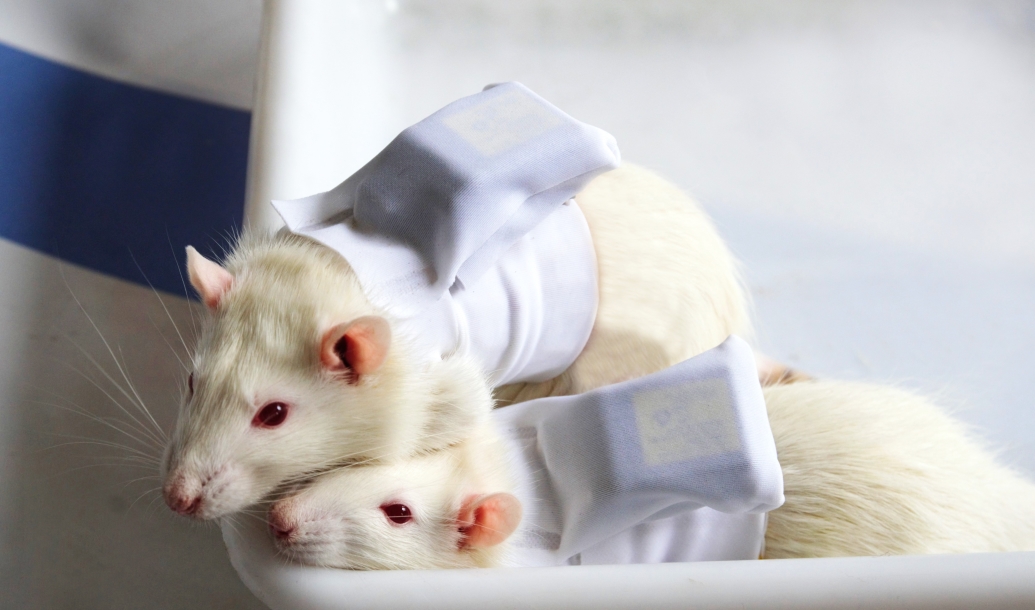
DECRO telemetry enables 24 to 48 hours of continuous monitoring of vital functions in rats housed in their cages, as well as in mini-pigs or dogs in their home pens.
Animals can be accommodated in pairs during recordings, maintaining natural housing conditions while collecting high-quality physiological data.
Resources on Vital Functions Monitoring
Surgical-free ECG Monitoring in Mice: Feasibility of a Telemetry Harness
Agathe CAMBIER, Clemence NADJAR, Charles EYNARD, Timothe FLENET ETISENSE R&D, Lyon, France. Abstract INTRODUCTION: While ECG monitoring in mice is vital for biomedical research, acquiring high-quality data remains challenging due to the technical complexity...
A Jacketed Telemetry Method for Monitoring Cardiorespiratory Adaptation during Exercice in Rats
Stéphane Tanguy1, Timothé Flénet2, Agathe Cambier2, Adèle Nicolas1, Charles Eynard2, Julie Fontecave-Jallon1, Pierre-Yves Guméry1, François Boucher1. 1TIMC CNRS, UMR 5525, Vet Agro Sup, Grenoble INP, Universite Grenoble Alpes, 2Etisense SAS DOI 10.3791/71616ABSTRACT...
Advancing Minipig physiological monitoring with an enhanced jacketed telemetry solution
Cambier, Agathe1 ; Nadjar, Clémence1; VOLLE, Guillaume1; Søgaard, Susi2; Birch, Pernille2 ; Brodersen, Katrine2; VHoeg Thygesen, Charlotte2; Latzko, Marie3; Baudet, Stéphane3; Chirat, Sophie3; Eynard, Charles1; Flenet, Timothé1 1 ETISENSE, Lyon, RHONE, France.2...
Cardiac Sympathetic Denervation Mitigated Ischemic Cardiomyopathy Progression in a Rat Model of Sleep Apnea
Maximin Détrait, Jonathan Gaucher, Emma Billoir and All. Laboratoire HP2, UGA, Inserm U1300, Faculté de Médecine-Pharmacie, Place du Commandant Nal, La Tronche, 38700, France. DOI 10.1161 JAHA.124.038781Abstract BACKGROUND: Ischemic cardiomyopathy with comorbid...
Explore Other Applications

Phenotyping of disease models
Monitoring of ECG morphological changes, ventilation, and locomotor activity patterns changes to better characterize pathological phenotypes and understand underlying pathophysiological mechanisms.

Pharmacology and safety-toxicology
Assessment of the efficacy and toxicity of novel pharmacological compounds on cardiorespiratory and central nervous system (CNS) functions in rodent and non-rodent species using jacketed telemetry.

Education and Training
Learn physiology and pharmacology using jacketed telemetry on rehomed animals, or through a new digital approach with pre-recorded, on-demand datasets from cardiorespiratory studies.

Veterinary
Use wearable telemetry to monitor vital signs (heart and respiratory rates) or the development of medical conditions (e.g., cardiopathy), either at home or at the veterinary clinic.